

 Clash of Clans

INTRODUCTION
Clash of Clans has been around for about 14 years, and during this time, the game has truly evolved, making Supercell famous. It's no secret that the company has games that are available in specific regions. For example, Brawl Stars in China, the version of which is significantly different from the global version.
Did you know that Clash of Clans has a similar version, but with some caveats? Last year, a copy of this game was discovered that was only available in North Korea. In this article, we'll try to understand what this game is, how similar it is, look at prices, and much more!
Fortress Defense Battle - a North Korean clone of Clash of Clans
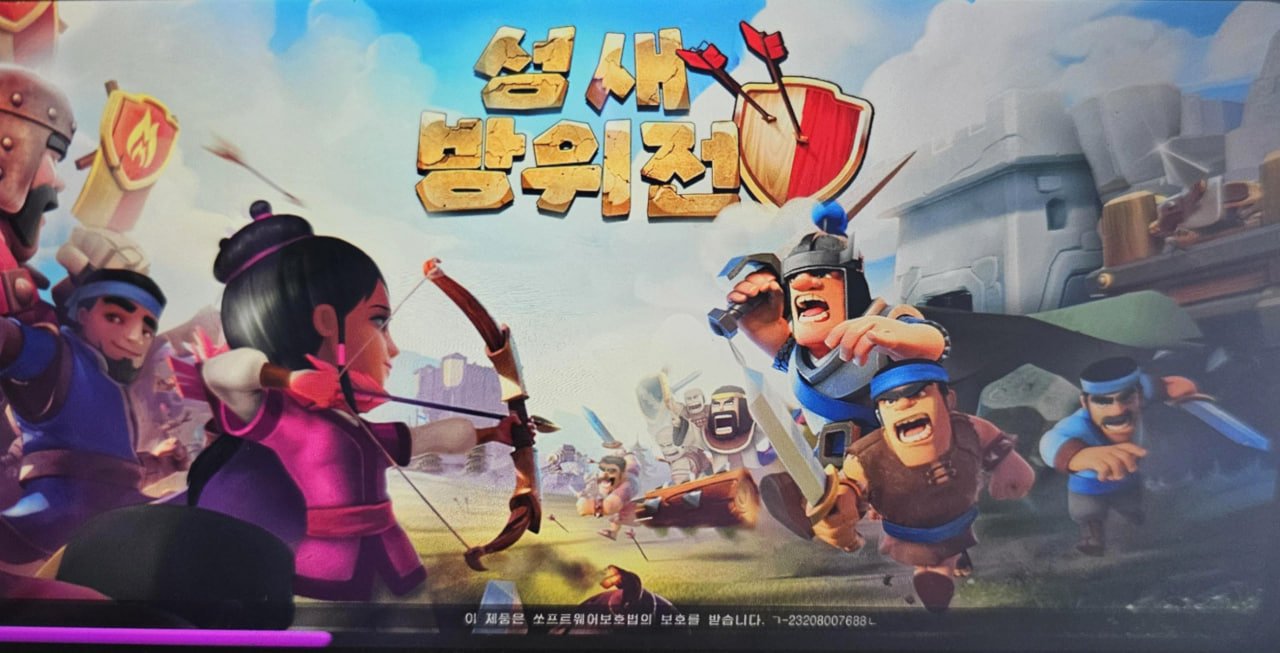
Meet Fortress Defense Battle. It's a North Korean local version of the iconic mobile strategy game Clash of Clans from the Finnish company Supercell. The game exists exclusively within North Korea's closed network and was only revealed to the world in February 2025 thanks to a chance discovery by a traveler.
Discovery
It all started with a Reddit post. A user named GRAUK posted in the r/ClashOfClans community, titled "North Korea has its own version of Clash of Clans." In the post, he reported that during a recent trip to the DPRK, he discovered locals playing a clone of the famous game on their smartphones.
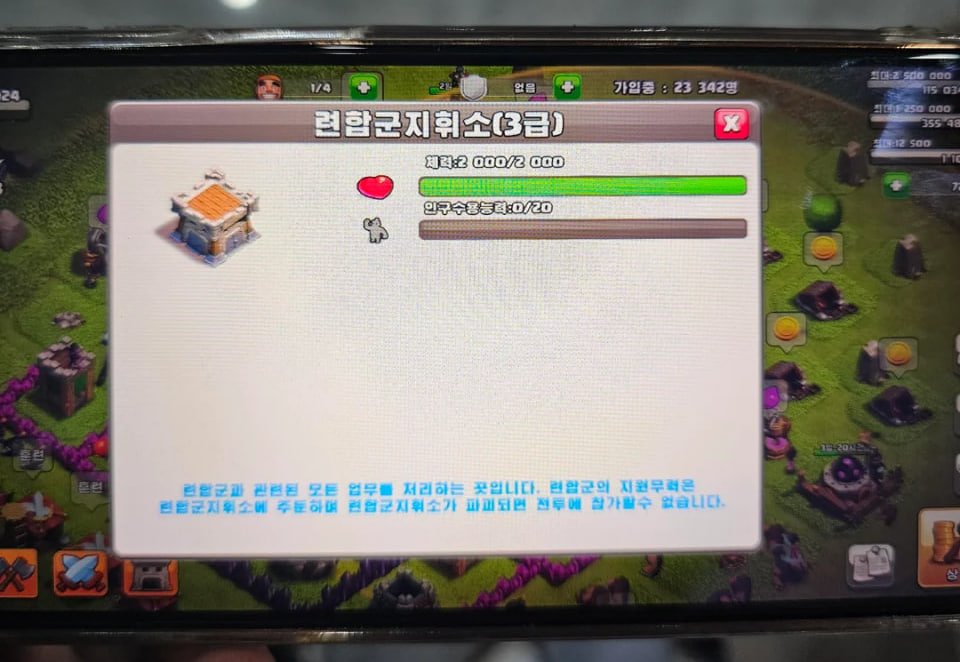
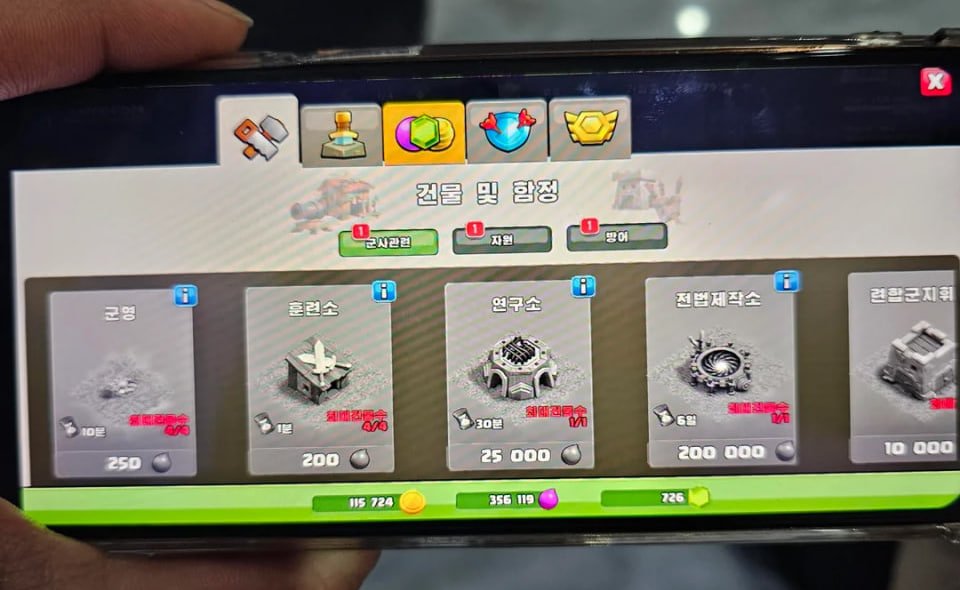
The post included 12 photos of a phone screen running the game, whose name, roughly translated into English, sounds like "Fortress Defense" or "Fortress Defense Battle." According to the author, the game is played "quite often."
The news quickly spread through gaming media and sparked intense interest among both Clash of Clans fans and researchers of North Korean digital culture.
Similarities to the Original
Judging by the published screenshots, Fortress Defense Battle is almost a complete copy of Clash of Clans. The game's core elements remain unchanged:
- Gameplay - base building and development, troop training, and attacks on other fortresses.
- Interface - visually almost identical to the original.
- Economy - the game includes premium purchases, such as various decorations for real money.
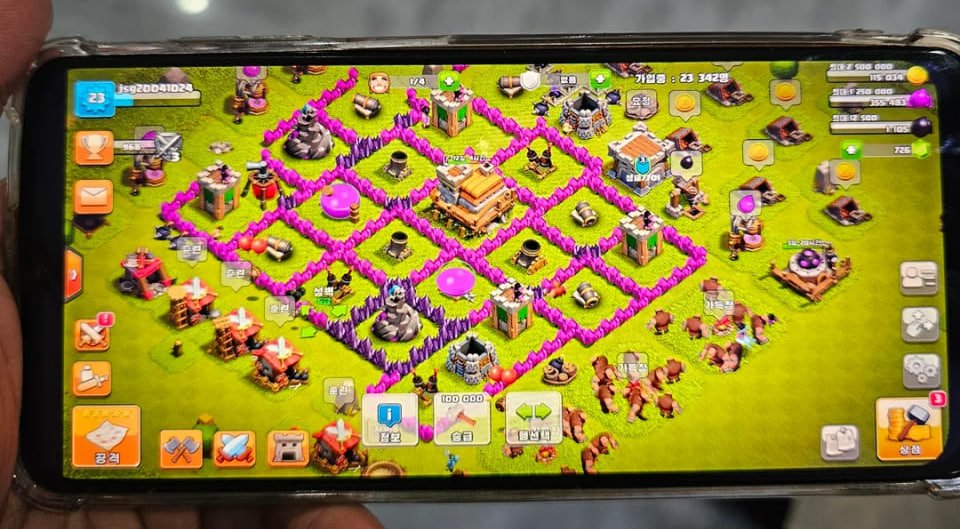
Main village in Fortress Defense (image via GRAUK) 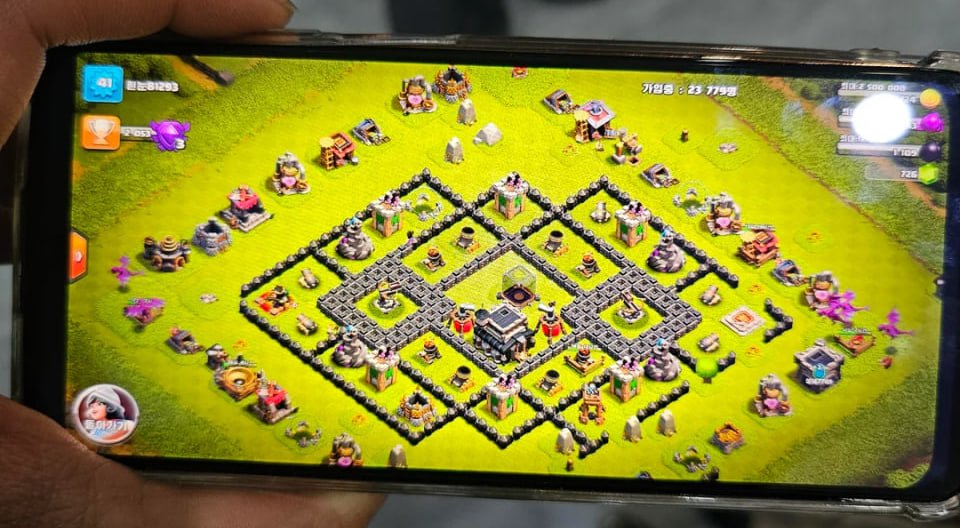
Village in Fortress Defense (image via GRAUK)
Key Differences
Despite the overall similarities, the developers have made several notable changes:
| Aspect | Clash of Clans | Fortress Defense |
|---|---|---|
| Troops | Medieval Style | Adapted to Korean Culture |
| Subsidized mechanics | Standart | Local Premium Purchases |
| Network | Global Internet | DPRK Intranet Only |
The main visual difference is the redesigned units, which now feature a look "closely tied to Korean culture." However, as observers note, "the gameplay remains almost identical."
Technical Features
Fortress Defense Battle operates within the North Korean intranet - an isolated internal network with no access to the global internet. This means that:
- The game is only available within North Korea - you CAN’T download it from other countries.
- It is likely pre-installed on government-issued smartphones.
- All information about updates and events is published exclusively within the local network.
That’s why all provided screenshots were made from other smartphones, not in-game.
Remaining Questions
Despite media attention, many questions remain unanswered:
- The developer is unknown. It is believed to be a government agency or a local studio commissioned by the government. It is also believed that the original version may have come from China.
- Release Date: The exact release date of the game is unknown. First public mention was in February 2025.
- Online and Statistics: There is no reliable data, as the game operates on an isolated network.
- Updates: There is no official website or social media pages; all information is published only within the DPRK.
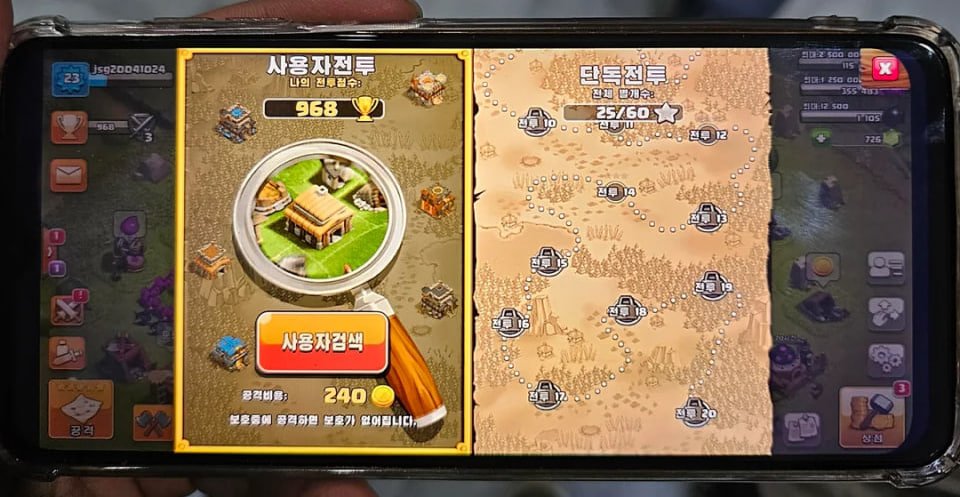
Searching players in Fortress Defense (image via GRAUK)
Price Comparison
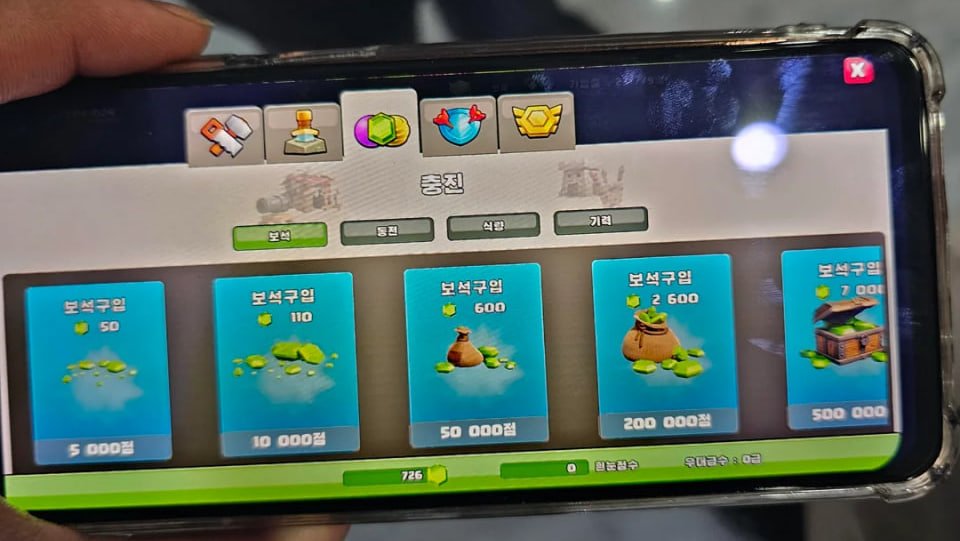
Fortress Defense has its own store with its own prices for gems. Comparing the global version to this one, one thing is certain: prices in Fortress Defense are 2200% higher than in the global game. This is utterly insane. For 7,000 gems in this game, you'll pay 500,000 North Korean won, which is equivalent to approximately $550 US. In the global version, the price for 7,000 gems is approximately $28. You can see the full image of gem prices above. These prices were for February 2025, and it's unknown whether they have changed, but one thing is certain: in any case, the prices in the game are insanely high. And given that the average worker's income in North Korea is barely ten dollars, it's safe to say that the game has a very low income.
Legal Aspects: Can Supercell File a Lawsuit?
Despite the obvious similarities between Fortress Defense Battle and Clash of Clans, which highly likely constitutes a copyright and trademark infringement, the prospects of a lawsuit against the North Korean developers are virtually nil. The obstacles are both legal and political.
Lack of Jurisdiction
Any court (for example, in Finland, where Supercell is registered, or in the United States, where the company has office) has limited territorial jurisdiction. The defendants - the game developers and North Korean government agencies - are located in North Korea and have no representative offices, branches, or assets outside of it. This means the court cannot recognize its jurisdiction over this case, even if the plaintiff formally filed a lawsuit.
Impossibility of Enforcement of a Court Decision
Even if we imagine a fantastical scenario in which a court were to accept the claim and rule in favor of Supercell (for example, ordering the game to be removed and compensation to be paid), this decision would be unenforceable in North Korea. North Korea does not recognize foreign court decisions and does not cooperate with foreign law enforcement agencies on such matters. Therefore, any legal action would remain purely symbolic and would not lead to any real change.
International Law Issues
International agreements on intellectual property protection, such as the Berne Convention or the WIPO Copyright Treaty, apply only between member states that recognize each other. North Korea is a party to the Berne Convention, but in practice, this does not give foreign copyright holders any leverage:
- International practice has seen cases where courts (for example, in Japan) have refused to protect the copyrights of North Korean citizens due to the lack of normal diplomatic relations.
- The situation is similar in reverse: American or Finnish courts will not enforce regulations regarding a North Korean defendant if there is no mechanism for interaction.
Economic Sanctions as an Additional Barrier
North Korea is subject to strict US and UN sanctions. These sanctions, among other things, target "counterfeiting of intellectual property," but they do not create a legal mechanism for lawsuits. On the contrary, they prohibit American companies and citizens from engaging in any commercial or financial transactions with North Korean entities. For Supercell, this means that even an attempt to hire a lawyer to represent the company's interests in any dealings with the DPRK could be considered a violation of the sanctions regime. In fact, any legal action is automatically blocked at the state regulatory level.
Practical Considerations
Besides legal and political reasons, Supercell likely sees no commercial benefit in litigation:
- The game is not available globally - it operates only on North Korea's closed intranet - and therefore does not cause economic harm to Supercell's business outside the country.
- Risk of reputational and political repercussions: A lawsuit against North Korean developers would inevitably attract politicized attention and could be interpreted as a hostile gesture rather than the protection of commercial interests.
- Zero likelihood of compensation: Even in the event of a hypothetical victory in court, it would be impossible to recover any funds from North Korea.
Supercell is forced to come to terms with the existence of this local version, which remains a curious phenomenon of digital culture in the most closed country in the world.
Conclusion
Fortress Defense Battle is a unique example of how global gaming culture penetrates even the most closed countries, adapting to local realities. Discovered by chance by a traveler, the game became a rare window into North Korean digital life and raised more questions than answers.
One can only wonder how many more similar "localized" versions of popular games are hidden outside North Korea's borders.
Images were taken from reddit from GRAUK: https://www.reddit.com/r/ClashOfClans/comments/1iz8ang/north_korea_has_its_own_version_of_clash_of_clans/
Share this article


