 Supercell

INTRODUCTION
March 2016. Supercell publishes its annual report for 2015. That year proved to be quite successful for the company, as it generated $2.3 billion in revenue. In that report, the company’s CEO, Ilkka Paananen, made the following statement: “To launch four games, we have killed 14”. At that point, the company already had four games in its portfolio: Hay Day, Boom Beach, Clash of Clans and Clash Royale, which was in development at the time. Following this event, the company will shut down a further eight of its games in the testing phase, and only one of these games will survive - Brawl Stars, which in the years to come will become one of the company’s biggest and most memorable titles. And by March 2025, Supercell released what is so far its latest title - mo.co - which would become more popular after May 2026 when its biggest update was released.
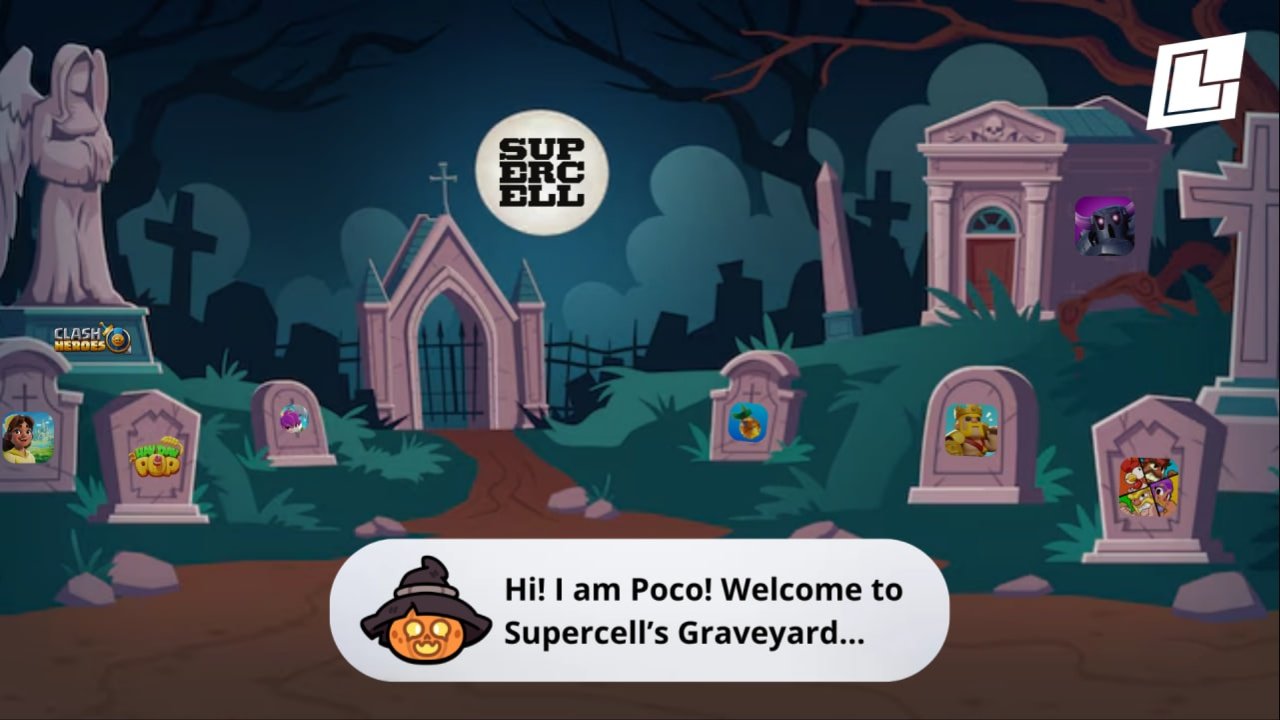
The company has accumulated so many discontinued games that a local term has even emerged - the “Supercell graveyard”. And whilst these games were previously shut down only at various stages of testing, everything changed in October 2025. On that day, Supercell announced the end of development on Squad Busters, the company’s first globally discontinued game. But why is this happening? Has the company really lost the knack for making games? What if shutting down games is actually the secret to the Finnish company’s success? In this article, we’ll look at all the company’s cancelled games, analyse the reasons behind their closure, and explore the real reason behind the phenomenon of cancelled games at the company.
OVERALL PICTURE
Before we open the gates and walk into the graveyard, let’s take a look at who actually lives here - and who’s still standing outside.
Supercell has released 7 games globally in its entire 16-year history. Seven. A number so small it almost feels like a joke for a company worth billions. But behind those seven titles lies a graveyard of 30+ games that never made it - most of which you’ve probably never heard of. Some died in secret. Some died loudly. And at least one died twice. Here’s the full cast:
THE LIVING GAMES:
Hay Day (2012 - present). Supercell’s first global hit. A farming game so wholesome it made Zynga’s FarmVille look aggressive. Still alive after 14 years. Respect.
Clash of Clans (2012 - present). The game that built the empire. Born from the ashes of a cancelled Facebook project, CoC turned a team of five into a billion-dollar franchise. Still in the top charts!

Boom Beach (2014 - present). The quiet middle child of the Supercell family. Nobody talks about Boom Beach, but nobody has killed it either. It just… exists. Peacefully. Like a veteran who knows better than to make noise.

Clash Royale (2016 - present). Real-time card battles that became a phenomenon - and then almost died - and then came back harder than ever in 2025. More on that later.

Brawl Stars (2018 - present). The game that was nearly killed before it launched. Supercell had cold feet, beta players weren’t impressed, and then somehow it became the biggest mobile esport in the world. The ultimate irony in a company full of ironies.

Squad Busters (2024-2026). Supercell’s first globally released game to be discontinued. The line between “the living” and “the dead” has never felt thinner.

mo.co (2025 - present). The newest resident. A monster-hunting action RPG. Still breathing - for now.

THE DEAD (publicly known ones - the rest are buried too deep to find)
1. Gunshine.net (2011-2012) - Browser MMO. 500k players. Dead.
2. Project “Magic” (2011) - Facebook game. Never launched. The team went on to make Clash of Clans.
3. Pets vs. Orcs (2012) - First mobile game. Lasted one month.
4. “Tower” (2012) - Cancelled alongside Pets vs. Orcs. So obscure even its full name is unknown.
5. Battle Buddies (2012) - Turn-based PvP tactics. Rated well in testing. Killed anyway.
6. Spooky Pop (2014-2015) - Match-3 ghostbusters. Colourful, dynamic, unwanted.
7. Smash Land (2015) - Physics battler. “Didn’t reach the high standards set by our other games.” The first time Supercell used that phrase. Not the last. 8. Rush Wars (2019) - Casual strategy. Killed after 3 months due to “repetitive gameplay.”
9. Hay Day Pop (2020) - Puzzle game. Made nearly $1 million. Killed anyway.
10. Boom Beach: Frontlines (2021-2022) - Boom Beach spin-off by Space Ape Games. 2M downloads. Dead.
11. Clash Quest (2021-2022) - Turn-based Clash strategy. One of three Clash games announced on the same day. First to die.
12. Everdale (2021-2023) - Peaceful city builder. Killed by Supercell, sold to Metacore, killed again. A record.
13. Clash Heroes (2021-?) - Co-op action RPG. Announced in April 2021. Never seen again. Officially: unknown status.
14. Floodrush (2023) - MOBA/battle royale hybrid. Lived exactly 3 months in beta.
15. Clash Mini (2021-2024) - Auto-battler. 2+ years in beta, $2.3M earned, then absorbed into Clash Royale.
That’s at least 15 publicly known games in the graveyard. And remember - Supercell says the real number is over 30. The rest? Unnamed, unlaunched, and unknown. Killed so early they didn’t even earn a tombstone. Now let’s go meet them properly.
Gunshine.net (2011-2012)
"Our first game. Our first lesson. Our first funeral."
It's the year 2010. Six people sit in a 30-square-metre office in Espoo, Finland. Their desks? Salvaged from a recycling centre. Their coffee maker? Fully operational - probably the most critical piece of equipment in the room. Their dream? To build a game company unlike any other.
The six founders - among them Ilkka Paananen and Mikko Kodisoja - weren't rookies. They came from Remedy Entertainment (the studio behind Alan Wake), Digital Chocolate, and Sulake (the company behind Habbo Hotel). These were people who knew how to make games. What they didn't yet know was how to kill them.
Their first project was ambitious. Possibly too ambitious for a startup with recycled furniture and borrowed money. Gunshine.net - also known internally as Zombies Online - was a browser-based isometric MMORPG. Think Syndicate (1993) meets zombie apocalypse meets Facebook. Players arrived on Dawnbreak City, an island created by the evil Labycore mega-corporation, chose one of three character classes (tank, damage dealer, or healer), and fought their way through quests alone or with friends. You could even borrow a friend's character while they were offline, letting the game's AI emulate their playstyle. For 2011, that was genuinely clever.
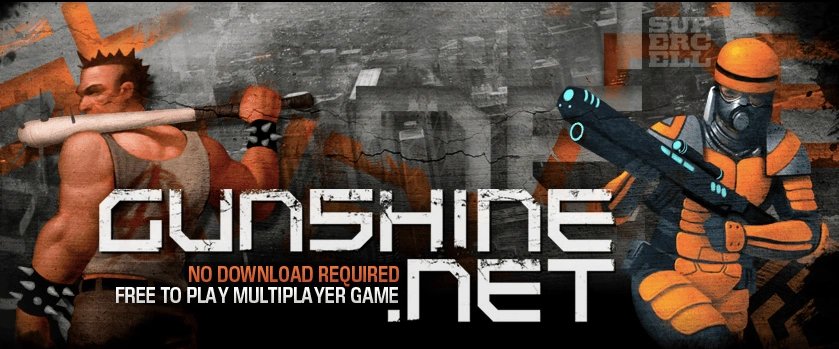
The prototype was ready in eight months. Investors noticed. In May 2011, Accel Partners - the same firm that had invested in Rovio, the studio behind Angry Birds - pumped €8 million into Supercell. The closed beta launched. Then came the open beta. And at its peak, Gunshine.net attracted around 500,000 monthly players. Five hundred thousand people. Playing a game made by a team working off recycled desks.
So naturally, Supercell killed it.
In November 2011 - less than a year after the open beta - Supercell pulled the plug on Gunshine. The servers didn't actually go dark until November 30, 2012, giving players a final year to say goodbye. But the decision was made early, and it was made for three very specific reasons:
- One: Players were getting bored after a month or two. The game simply couldn't hold attention long enough.
- Two: The barrier to entry was too high. The game was complicated, and not in a fun way. New players would show up, get confused, and leave.
- Three: The mobile version didn't work. And in 2011, if your game didn't work on mobile, it didn't have a future.
That third reason is the most telling. Gunshine was built as a browser game - which in 2011 still felt like the future of casual gaming. Facebook was at its peak. Zynga was printing money with FarmVille. But somewhere during the development of Gunshine, the Supercell team watched the mobile market explode in real time and realised they were building for the wrong platform.
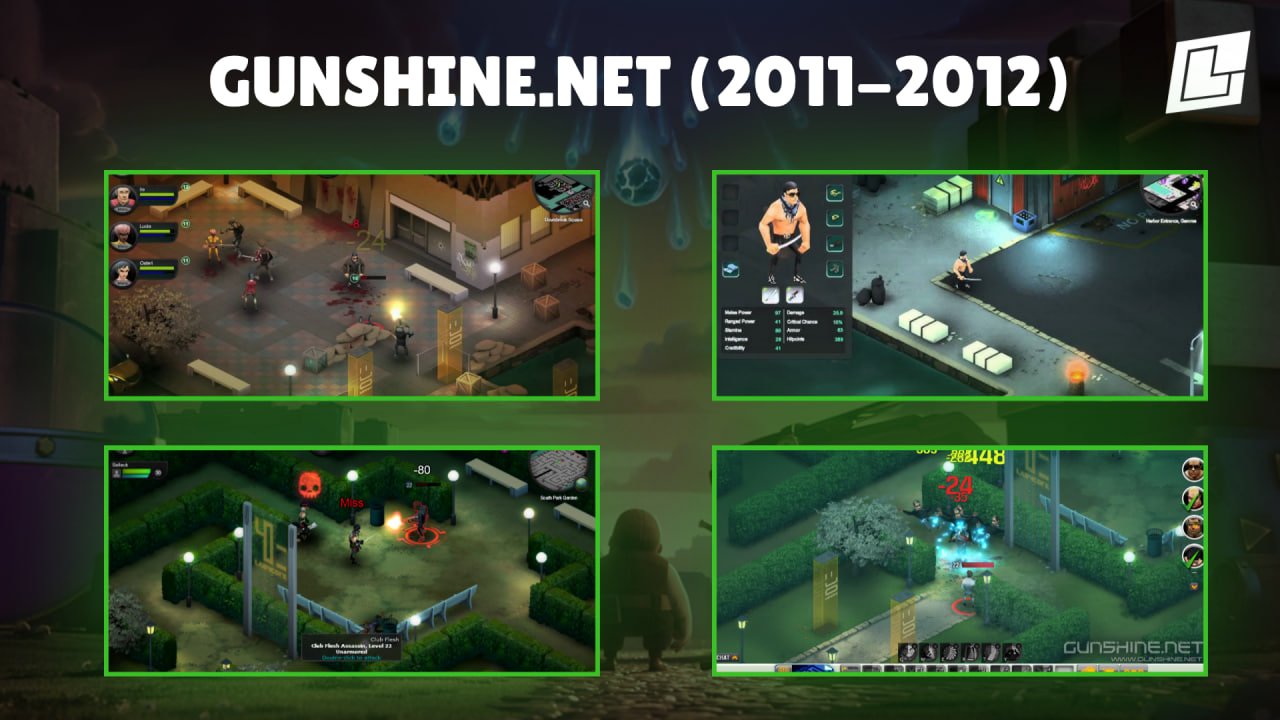
The decision to kill Gunshine wasn't just a product call. It was a strategic pivot that would define the entire company. Supercell looked at their half-million players, their €8 million in funding, their year of work - and said: this isn't it. By early 2012, they had reorganised into five small mobile-focused teams, each working on something new. From the ashes of Gunshine came Hay Day, Clash of Clans, and everything else that followed.
There's a Finnish article from November 2012 by journalist Elina Lappalainen with a headline that roughly translates to: "Even failure can be celebrated - hit game company Supercell buried its flop with champagne." That headline tells you everything about the culture that was already forming. Most companies mourn their failures quietly. Supercell opened a bottle.
Years later, Ilkka Paananen would describe the lesson from Gunshine in simple terms: "It's usually better to kill games earlier rather than later. If it starts to feel like the game isn't going to work or isn't fun enough, it's usually a sign that you should have already killed it."
Gunshine wasn't just the first game Supercell killed. It was the game that taught them how to kill - and why killing, done right, is actually an act of creative courage.
First funeral. Champagne all around. Let's move on.
Project "Magic" (2011)
"A game that had never been seen before on Facebook. Killed before Facebook ever saw it."
While Gunshine was still dying its slow death in late 2011, something else was happening in another corner of the Supercell office. A small team of five people had been working, in their own words, "day and night for nearly six months straight" on a Facebook game with the codename Magic. And by all accounts, it was something special.
"It looked amazing," Supercell would later write on their own website, "and it was a game that had never been seen before on Facebook."
That's not marketing language. That's a company eulogising something they loved and chose to destroy anyway.
To understand why, you need to understand what Facebook looked like in 2011. Zynga - the company behind FarmVille, Mafia Wars, and approximately seventeen other games your parents were addicted to - was an absolute monster. At its peak, Zynga represented an estimated 20% of all Facebook page views and 19% of Facebook's total revenue. Three hundred million monthly active users. The company was valued higher than Electronic Arts. On Facebook, Zynga wasn't just winning - Zynga was the game.
Supercell looked at this landscape and made a cold, unsentimental calculation: even if Magic was extraordinary, Zynga's grip on the Facebook platform was insurmountable. There was no path to victory. Not for a startup from Espoo with recycled desks.
So they killed it.
Not reluctantly, not halfheartedly - but as part of a radical company-wide decision. In the autumn of 2011, Supercell announced internally what they called a "tablet first" strategy. Every ongoing web and Facebook project was to be cancelled immediately. The entire company would bet on mobile. As Supercell's own about page puts it: "We decided to kill all ongoing productions for web and Facebook and bet the entire company on a strategy that we started to call 'tablet first'."
For most of the company, this was a strategic pivot. For the Magic team, it was a funeral. Five people. Six months. A game nobody outside the company ever saw. Gone.
But here's the part that makes this story genuinely remarkable: that same five-person team, fresh from watching their game get killed, immediately regrouped and started building something new. A mobile strategy game. A game about building a village, training troops, and raiding other players. A game they also - perhaps out of sentiment, perhaps out of stubbornness - codenamed "Magic."
That second "Magic" became Clash of Clans. Released on August 2, 2012, Clash of Clans would go on to generate over $10 billion in revenue and become one of the most successful mobile games in history. It's now getting a Netflix animated series. The Barbarian alone has become one of the most recognisable characters in mobile gaming.
All of it born from the ashes of a game that died before anyone played it.
There's a version of history where Supercell decides to fight Zynga on Facebook. Where they keep pushing Magic, iterate on it, try to carve out some corner of that market. Maybe it works. Maybe it doesn't. But in that version, the team stays on Facebook - and Clash of Clans never exists. Instead, they killed the game. And the people who lost that game built an empire.
Zynga, by the way, started collapsing within two years. By 2013, their revenue was falling, their stock had tanked, and they were closing games left and right. The platform Supercell considered "insurmountable" turned out to be a house of cards.
Supercell killed Magic because they thought they couldn't beat Zynga on Facebook. They were right. They just didn't need to.
Pets vs. Orcs & "Tower" (February 2012 / Spring 2012)
"One lived for a month. The other didn't even get a real name."
By early 2012, Supercell had killed a browser MMO, killed a Facebook game, and bet the entire company on mobile. They now had five small teams working simultaneously on five different projects. The company's own words on this period are remarkably candid: "We knew that one of those games would have to be at least moderately successful for the company to have a future."
Read that again. This is a company that had already received millions in funding, already had half a million players on Gunshine, already had press coverage - and they were genuinely not sure they had a future.
Out of those five teams, two would create Hay Day and Clash of Clans. The other two built Pets vs. Orcs and a game called "Tower." And those two? Gone before most people ever heard of Supercell.
Pets vs. Orcs was Supercell's first mobile game. A casual strategy title where you built and defended a town using - as the name suggests - an army of pets against waves of orcs. Dogs, cats, bears, turtles, all trained up and sent to battle. Two resources: gold and diamonds. The core loop was familiar, simple, and clearly influenced by what Supercell had already learned from Gunshine and Magic. This was them trying to find a mobile formula that worked.
It didn't work. Pets vs. Orcs went live for public testing in early 2012 and lasted just over a month before Supercell pulled it. No lengthy post-mortem, no dramatic announcement. Supercell simply concluded it wasn't going to be good enough - and killed it in February 2012, exactly as their new philosophy demanded. "It's usually better to kill games earlier rather than later," they had learned from Gunshine. They were already applying the lesson.
"Tower" is even more mysterious. It was one of those same five projects running in parallel, and Supercell killed it in the spring of 2012 - a few months after Pets vs. Orcs. What exactly was Tower? Nobody outside Supercell seems to know for certain. No screenshots surfaced. No ex-developers gave interviews about it. The name itself is a codename, not a title. It has the distinction of being the most anonymous entry in Supercell's entire graveyard: a game so thoroughly erased that even its genre is unconfirmed.
What we do know is this: Tower was killed while Hay Day and Clash of Clans were still in development. By the time summer arrived in Finland in 2012, Hay Day had launched globally, Clash of Clans was weeks away from release, and Tower was already a memory no one was talking about.
Together, Pets vs. Orcs and Tower represent something important about this era of Supercell's history. These weren't games killed because they failed publicly - they were killed privately, quietly, by the teams that built them. No players were disappointed. No community lost a beloved game. These deaths happened in the lab, before anything reached the outside world. That, Supercell would come to believe, was exactly how it should be.
The graveyard was growing. But so was the company. Three of the five teams from early 2012 would define Supercell's entire future. Two of them didn't even make it to summer. And nobody opened a bottle of champagne for Tower, because nobody outside the office ever knew it existed.
Battle Buddies (2012)
"Great graphics. Awesome gameplay. Four fatal mistakes. Goodbye."
Battle Buddies was the most ambitious project of Supercell's early mobile era - and the most public casualty of 2012. Unlike Pets vs. Orcs, which died quietly after a month, or Tower, which disappeared without a trace, Battle Buddies actually made it into the hands of real players. It had press coverage. It had previews. It had people genuinely excited about it.
And then Supercell killed it anyway.
The concept was genuinely original for 2012. A top-down PvP tactical shooter where you controlled a team of six customisable cartoon soldiers - pirates, space marines, whatever you wanted - and used line-drawing mechanics to direct movement and aim. Think UFO: Enemy Unknown meets Words With Friends, but with a Wrecking Ball Launcher and cross-platform multiplayer between iOS and Android. Reviewers called it a potential "benchmark for tactical strategy games on mobile." The art style was polished. The gameplay had depth. For a studio still finding its feet, Battle Buddies looked genuinely impressive.
It soft-launched in Canada and Finland in 2012, and that's when the cracks started showing.
Gaming blog Deconstructor of Fun published a detailed breakdown of the beta that reads almost like a prophecy. The verdict: "Great graphics, awesome gameplay, player vs. player mode, proven concept and first-mover advantage. Supercell's newest title Battle Buddies combines all of the characteristics above yet falls short." The problems were specific - a broken progression system, consumable weapons that disrupted balance, a coin economy that didn't work, and critically, an asynchronous PvP system where you'd make your move and then wait hours - sometimes eight or more - for your opponent to respond. In 1995, that might have been acceptable. In 2012, players had Clash of Clans loading in under three seconds.
The reviewer ended with a plea: "I really hope that Supercell has the courage to pull the game back and seriously rework the core loop." Supercell had the courage. Just not the kind the reviewer was hoping for.
The player numbers never grew enough to justify continued development. Despite positive critical reception, monetisation was poor - players liked Battle Buddies but weren't willing to pay for it. Supercell's own about page states it plainly: "Unfortunately, the game never garnered enough player interest to move out of beta, so we had to kill it too."
But here's what makes Battle Buddies different from every other grave in this section of the cemetery: the decision to kill it was made by the development team themselves. Not executives. Not investors. The people who built it looked at the numbers, looked at the game, and concluded it wasn't good enough. This was Supercell's internal culture already working exactly as designed - small autonomous teams with the power and responsibility to end their own projects.
That detail mattered enormously. Most game studios kill proects from the top down: someone in a suit looks at a spreadsheet and pulls the plug. Supercell had built a system where the people closest to the game made the call. It's a more painful process - there's no one to blame, no decision handed down from above. But it's also more honest. The Battle Buddies team didn't need a CEO to tell them their PvP loop wasn't working. They knew.
By the end of 2012, three of Supercell's five mobile projects were dead. The two survivors - Hay Day and Clash of Clans - were both in the top charts globally. The company that had been genuinely uncertain about its future just twelve months earlier was now one of the fastest-growing game studios on the planet.
Battle Buddies never got a global launch. It never got a second chance. But it gave something to Supercell that no successful game could: proof that their culture of killing worked, even when it hurt.
Spooky Pop (December 2014 - February 2015)
"Three months. Two updates. One pop-up notification. Gone."
By late 2014, Supercell was the top-grossing mobile game developer in the world. Clash of Clans alone was rumoured to have generated $1.8 billion in revenue that year. Hay Day was a permanent fixture in the top charts. Boom Beach had just launched. The company that once worked off recycled desks in a 30-square-metre office in Espoo was now a global phenomenon.
And somewhere in the middle of all this, a small team quietly soft-launched a match-3 game about ghostbusters. With no official announcement. No press release. No Supercell branding on the App Store page.
Just: Spooky Pop. Available in Canada. December 2, 2014. Tell no one.
That was standard Supercell procedure by now - soft launch in a small market, watch the numbers, make a decision. But Spooky Pop was notable for one particular reason: it was the first time since Battle Buddies in 2012 that any Supercell game had reached the soft launch phase at all. Two full years had passed without a single new title making it this far. The graveyard had been quiet. Which meant a lot of games had been killed before anyone outside the company ever saw them.
The game itself was genuinely interesting. A hybrid match-3 puzzler where you made matches on the bottom half of the screen to charge up a team of ghost-hunting characters on the top half, who would then attack waves of incoming monsters. Think Plants vs. Zombies meets Puzzle & Dragons, wrapped in a colourful Halloween aesthetic. Reviewers who played the beta described it as visually polished, dynamic, and fun - at least for the first hour. That "at least for the first hour" was the problem.
Deconstructor of Fun, the same analytical blog that had dissected Battle Buddies two years earlier, published a detailed breakdown of Spooky Pop's beta. Their verdict: the game had the right ingredients but was missing depth. All 80 levels in the soft launch used the same mechanics, the same goals, and the same visual style. There was no offline mode, no meaningful progression curve, and no hook to keep players coming back after the initial novelty wore off. The reviewer wrote: "After playing through all 80 levels that Spooky Pop currently has in soft launch, I'm not waiting for more."
The broader gaming world was watching. Supercell had conquered farming games, strategy games, and base-building games. If they cracked puzzle games too, it would send shockwaves through the industry. Developers worldwide were reportedly nervous. As one analyst put it at the time, the expectations for any new Supercell title were "immense, to say the least." Spooky Pop didn't crack puzzle games.
On February 9, 2015 - exactly ten weeks after launch - players opened the app and found a pop-up notification informing them the game was ending. No blog post. No explanation from Supercell. The app disappeared from the Canadian App Store the same day. The only public evidence that Spooky Pop had ever existed was a tweet from a Finnish developer who spotted the in-game message before the servers went dark.
Pocket Gamer's headline the next morning: "There's no word from Supercell about why it's decided to cancel Spooky Pop yet."
There never really was. Supercell's standard operating procedure was already in place: if the numbers don't work, kill it fast and say little. Spooky Pop didn't attract enough players. The retention wasn't there. The depth wasn't there. The market for match-3 was dominated by Candy Crush Saga, which had launched two years earlier and had an almost impenetrable grip on casual puzzle players. And unlike the Facebook vs. Zynga situation of 2011, Supercell didn't pivot - they just quietly closed the door and moved on.
There's a cold business logic buried in the Spooky Pop story that's worth noting. By 2015, Supercell had so much money from Clash of Clans that they could afford to be brutally selective. A game that was merely good wasn't good enough anymore - not when the opportunity cost of launching something mediocre was diluting a brand that had come to stand for excellence. Pocket Gamer put it plainly: "Supercell is the top grossing mobile game developer in the world. Spooky Pop may not have been a bad game. Just one that didn't live up to expectations."
Ten weeks. Two updates. One pop-up. No explanation. Next.
Smash Land (April - September 2015)
"Popular. Positively reviewed. Killed anyway. P.S. You're welcome, Clash Royale."
Three months after Spooky Pop, Supercell was back at it. April 2015. Soft launch in Canada and Australia. New game, new genre, new attempt to prove the company could do more than strategy and farming. This time it was a physics-based battler called Smash Land.
The concept came straight from Japan. Monster Strike - a game where you pull back characters like a slingshot and watch them ricochet off walls, enemies, and each other - had in December 2014 overtaken Puzzle & Dragons as the number one game in Japan. It was making hundreds of millions of dollars. Supercell looked at it the same way they'd once looked at FarmVille: here's a proven formula. Can we simplify it and make it work for a Western audience? The answer, as it turned out, was no. But it took a while to figure that out.
Smash Land arrived in soft launch with no official announcement - standard Supercell procedure by 2015 - and was discovered almost immediately by sharp-eyed players who shared it online before Supercell had said a word. The game spread through gaming communities on its own, which only raised the pressure. By the time Supercell acknowledged it existed, Smash Land already had a fanbase.
And fair enough. The game had genuine charm. You lined up cartoon characters and launched them at enemies in a top-down arena, watching them bounce off walls and obstacles in satisfying chain reactions. It was intuitive, colourful, and immediately fun to pick up. Players in the beta genuinely enjoyed it. The feedback was largely positive. Supercell was even accepting real money through in-app purchases - which, in the graveyard's history, was a first. People were paying for a game that Supercell hadn't decided to keep yet.
On July 1, 2015, Supercell announced it was ending Smash Land's development. Purchases were halted immediately. The final shutdown date was set for September 1st, giving players two months to say goodbye.
The official statement was a new verse of a song the graveyard was beginning to know by heart: "Despite its popularity and positive feedback from players, it was proving difficult to reach the high standards set by our other games. We did not want to continue for the sake of continuing, as that is not the Supercell way."
There was, however, a subtext that careful readers noticed. The phrase "high standards set by our other games" was pointed. By mid-2015, Clash of Clans was the number one grossing app on the App Store. Boom Beach was sixth. Hay Day was sixteenth. Any new Supercell game wasn't competing with other mobile games - it was competing with Clash of Clans. That's an almost impossible bar to clear.
There was also a quiet controversy surrounding Smash Land that Supercell never addressed directly. Many players and analysts felt the game borrowed too heavily from Monster Strike - not just the physics mechanic, but specific design elements. The industry publication MCV noted that Supercell's reference to "our other games" in the shutdown statement "may be a veiled recognition of the mild controversy" surrounding the Monster Strike comparisons. Supercell never confirmed this. The champagne was opened, the game was killed, and no one said anything more about it. But here's where Smash Land's story gets genuinely interesting - and where it earns its place in graveyard history as more than just another casualty.
When Smash Land died, its team didn't disband. They were absorbed into another project that was in development at the same time. A real-time PvP card game set in the Clash of Clans universe. A game that would launch globally in March 2016 and become one of the most successful mobile games ever made.
Years later, when Supercell killed Clash Quest, the Clash Quest team's farewell message included a notable line: "It was the killing of Smash Land that enabled Clash Royale's growth!"
Think about that. One of Supercell's five live games - a game that has generated billions of dollars, built a global esports scene, and in 2025 experienced its biggest revenue month in eight years - exists partly because another game was killed and its developers were redirected. The graveyard didn't just teach Supercell lessons. It fed its survivors.
Smash Land never got a global launch. But without Smash Land's death, Clash Royale might not have been what it became. In Supercell's graveyard, even the dead serve the living.
Rush Wars (August - November 2019)
"Three months. 393,000 downloads. $312,000 earned. 'Not the Supercell way."
Four years. That's how long the graveyard had been quiet in soft launch terms. After Smash Land in 2015, Supercell released Clash Royale (2016) and Brawl Stars (2018) - two global hits in three years. The machine was working. The philosophy was vindicated. And somewhere in Helsinki, a new team was quietly building something they hoped would be the next big thing. They called it Rush Wars.
The concept was deliberately accessible. A build-and-battle strategy game designed specifically for casual players - the people who might find Clash of Clans or Boom Beach too complex. You built a base, assembled a squad, sent it to attack enemies, defended against incoming raids. Clean. Simple. Familiar. The team's stated goal was to make "a different type of build and battle game that casual players could enjoy." Rush Wars soft launched in August 2019, and almost immediately the numbers told a story nobody wanted to hear.
Sensor Tower's data was damning in its precision: 393,000 downloads & $312,000 in revenue. Compare that to Brawl Stars at the same point in its soft launch life - from Canada alone, Brawl Stars had 860,000 downloads and $910,000 in revenue. Rush Wars had less than half the downloads and a third of the revenue of a game that Supercell had nearly killed before launch. That contrast wasn't just embarrassing - it was a flashing red warning sign.
Players who did download Rush Wars were quick to identify the problem: it got repetitive. Fast. The core loop - attack, defend, repeat - didn't have enough variation to keep people engaged beyond the first few sessions. Supercell heard the feedback and pushed out updates designed to address it. They tweaked the strategy, changed the dynamics, tried to introduce enough variation to rescue the gameplay.
It didn't work. Three months into the beta, Supercell posted the shutdown announcement on their official forum. The wording was familiar to anyone who'd been following the graveyard - but with one addition that felt slightly more resigned than usual:
"We heard your feedback with the game feeling repetitive, and we made some changes with a few updates. However, the changes we made didn't help the game long term nor change up the gameplay style enough to make it as fun as we would like. Here at Supercell, we have extraordinarily high standards for our games. We want to be sure that each game we release will be played for years and remembered forever. Unfortunately, we felt that even if we continued working on Rush Wars, we wouldn't hit this goal."
That last sentence is the key one. Not "we couldn't fix the problems." Not "the numbers weren't there." But: even if we continued working on it. Supercell had looked at Rush Wars and concluded that no amount of iteration would turn it into a game worth keeping. The core was broken in a way that couldn't be patched. The only honest thing to do was close it.
In-app purchases were switched off the day of the announcement. Servers shut down November 30, 2019. Twenty-four days of notice, a clean exit, and another bottle of champagne in Helsinki.
The broader context matters here. By 2019, Supercell's revenues had been declining for three straight years - from a peak of €2.1 billion in 2016 down to $1.56 billion in 2019. Rush Wars was supposed to be the new thing, the next chapter. It flopped quietly instead. CEO Ilkka Paananen addressed it in his annual letter with characteristic understatement, calling the financial results "slightly lower than last year's" - a sentence that deserves some kind of award for calm in the face of a multi-year revenue decline.
But here's what makes Rush Wars important beyond its own short story: it was the last game Supercell killed before things got genuinely complicated. After Rush Wars, the graveyard would start filling up with games that had been alive longer, games that had more players, games with real communities behind them. The era of quiet, anonymous beta deaths was ending. What came next was messier. And sadder. And more expensive.
Hay Day Pop (March 2020 - February 2021)
“One of the best games we ever killed.”
Hay Day Pop breaks something important in the logic of the graveyard.
Every game killed before it had a clear reason - players got bored too fast, the monetisation didn't work, the gameplay was too repetitive, the numbers were too low. There was always a concrete failure you could point to. Hay Day Pop didn't have that. Hay Day Pop was, by most reasonable metrics, doing fine.
The game soft-launched in March 2020 across an unusually large number of markets for a Supercell beta: Australia, Finland, New Zealand, Denmark, Norway, Sweden, Iceland, France, India, the United Kingdom, Ireland, and Canada. That's twelve countries. For context, Smash Land launched in two. Rush Wars launched in a handful. Hay Day Pop getting twelve markets was a signal that Supercell believed in it.
The game itself was a puzzle title using the beloved Hay Day visual universe - the same farmyard characters and aesthetic that players had known since 2012. Mechanically, it was a block-popping puzzler with meta-progression on top: you tapped connected coloured cubes to clear boards and score points, while the broader game had a progression system meant to give it long-term depth. Think casual Candy Crush territory, but with Supercell's trademark polish.
It worked, commercially. By the time Supercell pulled the plug in November 2020, Hay Day Pop had accumulated 360,000 downloads and just under $1 million in revenue - $990,000 to be precise. Nearly a million dollars. From a game in a limited soft launch. In isolation, those numbers don't look like failure. But Supercell doesn't measure games in isolation.
The shutdown announcement was, by now, a familiar document. High standards. Games played for years. Remembered forever. The usual architecture of a Supercell farewell. But this time, CEO Ilkka Paananen added something in his annual letter that was more honest than anything the company had said about a cancelled game before:
"It must be one of the best games we ever killed. However, unfortunately it didn't find a large enough audience. The team ultimately felt like they could create better games and decided to kill it and shared their learnings with all of Supercell."
One of the best games we ever killed. That sentence deserves a moment. Supercell's CEO is openly acknowledging that the game was good - genuinely good, possibly the highest quality product they'd cancelled. And they killed it anyway. Not because it was bad. Not because nobody played it. Not because it was broken or derivative or boring. But because it didn't find a large enough audience, and because the team believed they could do better.
This is Supercell's philosophy at its most extreme - and, depending on your perspective, either its most admirable or most unsettling expression. Most companies would have looked at $990,000 in revenue, twelve markets of soft launch data, and a polished product and said: let's keep going. Let's iterate. Let's push to global launch and see what happens.
Supercell looked at exactly the same data and said: we can do better. Kill it.
There's a cold arithmetic buried in this decision that's worth making explicit. By 2020, Brawl Stars alone was generating hundreds of millions of dollars. Clash of Clans was still printing money. The opportunity cost of spending developer time on a game that might eventually make $5 million globally - when those same people could be working on something that makes $500 million - was, by Supercell's calculus, not worth it. You don't need a failing game to justify killing it when your baseline for success is Clash of Clans.
The servers shut down on February 1, 2021. Players who had made in-app purchases were allowed to transfer their spending to other Supercell titles. One final update was rolled out as a goodbye.
And here's the epilogue that makes the story complete: in early 2026, Supercell quietly soft-launched another puzzle game using the Hay Day universe, called Hay Day Match - this time built not internally but by an external studio. The character of Mavis, who had been the face of Hay Day Pop, reappeared as the lead. A second attempt at the same genre, the same IP, six years later - this time with outside help.
Supercell killed one of its best games. Then came back for another try. Whether that's wisdom or stubbornness is genuinely hard to say.
Boom Beach: Frontlines (October 2021 - January 2023)
"1 million pre-registrations in 48 hours. 2 million downloads. $440,000 earned. Not enough."
By 2021, Supercell's killing culture had spread beyond Helsinki. The company owned 75% of London-based Space Ape Games - a studio of 120 people with $375 million in lifetime revenue and a genuine hit on their hands in Beatstar, a music rhythm game that earned $75 million in its first year alone. Space Ape weren't amateurs. They had built real games for real audiences. And yet, when they made a Supercell-universe game, they died a Supercell-universe death.
Boom Beach: Frontlines had been in development for four years. The concept was ambitious: a 9v9 real-time team PvP set in the Boom Beach world, with tanks, airstrikes, customisable unit loadouts, and regular map rotations to keep combat fresh. At its peak, 30 people were working on it. Before soft launch even began, the game had crossed 1 million pre-registrations in 48 hours - a number that briefly sent it to the top of Google Play's free charts. The excitement was real.
Soft launch started in Canada in October 2021. Over the following year, the game passed 2 million total downloads and earned $440,000 in revenue. The Space Ape team pushed out major updates: new features, redesigned progression systems, rebalanced core gameplay. They were doing everything right by the playbook.
But the engagement numbers told a different story. By late 2022, Frontlines was generating about 5,000 downloads and $20,000 in revenue per month. The initial excitement had evaporated. Long-term retention - the one metric Supercell considers non-negotiable - simply wasn't there.
On November 28, 2022, Space Ape made the announcement: “Even with all our efforts over the past year - introducing major features, redesigning progression, balancing the core gameplay, and much more - we felt that Boom Beach: Frontlines was still not reaching the expectations we had set for it.”. Servers shut down on January 16, 2023.
Space Ape co-founder Simon Hade gave a remarkably candid interview afterwards. His explanation for the decision: "We were not seeing the long-term engagement to justify a global launch." And his broader philosophy - which sounded indistinguishable from Paananen's - was equally direct: "The kinds of games we get most excited about making are services that run for years and grow over time. Launching globally is a big commitment, and we want to be sure we see a path to people playing this in a decade."
Supercell's culture of killing wasn't just internal anymore. It had been exported to London, absorbed by a studio that had developed it independently, and applied with the same cold clarity to a game with 2 million downloads. Four years of development. Thirty people at its peak. Two million downloads. One million pre-registrations in 48 hours. Not enough.
Clash Quest (April 2021 - September 2022)
"Announced with two siblings. The first to die. 16 months, one complete reboot, and a farewell letter that mentioned Clash Royale."
April 21, 2021. Supercell held what was, by their standards, an unusually theatrical event. In a single day, they announced not one, not two, but three brand new games - all set in the Clash universe. Clash Quest. Clash Mini. Clash Heroes. Three different genres, three different teams, three different bets on what the Clash IP could become.
The internet was excited. Supercell hadn't launched a new game since Brawl Stars in 2018. Three years of silence, and now this - a triple announcement, each game with its own trailer, its own aesthetic, its own promise. Clash Quest was the first to enter soft launch. And the first to die.
The game was a turn-based tactical adventure - something genuinely different from anything Supercell had made before. Players assembled a crew of Clash characters, sailed between islands on a grid-based map, and battled waves of goblins and enemies using strategic troop placement. Think puzzle-RPG with Clash characters, closer in spirit to games like Puzzle & Dragons than to Clash of Clans. The Helsinki team developing it was clearly swinging for something new.
Soft launch began in May 2021. For the first few months, things seemed promising. The game had a dedicated fanbase, active Reddit and Discord communities, and players genuinely invested in its world. Supercell pushed regular updates throughout 2021 - new dungeons, new upgrade systems called Runes, Magic Items, Clan features, new troops and spells, new enemy types. The team was iterating hard, trying to build enough depth to make Clash Quest a game people would play for years.
It wasn't working. Player retention - always the number Supercell watches most closely - wasn't where it needed to be. The core loop, as Deconstructor of Fun later analysed, was fundamentally single-player in nature, which made it difficult for social mechanics like Clans to have real impact. The progression felt grind-heavy. The puzzle element didn't quite deliver the satisfaction players expected.
By summer 2022, the situation was serious enough that Supercell made a drastic call: a complete reboot of the game's meta. Major design changes, new systems, effectively a reset of what Clash Quest was supposed to be. It was Supercell admitting, as loudly as they ever admit anything, that the original vision wasn't working. The reboot didn't save it either.
On August 17, 2022 - 16 months after soft launch, and just weeks after the big redesign - Supercell announced the end of Clash Quest. The statement was characteristic:
"At Supercell, it's well known that we set very high standards for our games. Because of this, even after the recent design changes we implemented just before the summer break, we felt Clash Quest still didn't reach the bar we were aiming for."
Servers shut down in late September 2022. But the Clash Quest team's farewell letter - posted on Supercell's official website - was one of the most emotionally honest shutdown messages the company had ever published. The team thanked players and content creators for their dedication. They acknowledged the community they had built. And then, in the final paragraph, they included this line:
"It was the killing of Smash Land that enabled Clash Royale's growth!"
It was a remarkable thing to include in a goodbye message. Not bitterness - hope. A reminder, to themselves as much as anyone else, that in Supercell's world, death feeds life. That the work done on Clash Quest, the lessons learned, the people now freed to work on other things - all of it would flow somewhere. Nothing is wasted. That's the promise embedded in Supercell's culture of killing.
Whether the Clash Quest players found that comforting is another question entirely. Clash Quest was the first of the three April 2021 siblings to fall. It would not be the last.
Everdale (August 2021 - October 2022; January 2023 - September 2024)
"Killed by Supercell. Resurrected by Metacore. Killed again. IP returned to Supercell. The most stubborn grave in the cemetery."
Every graveyard has that one plot where someone keeps digging the body back up. In Supercell's cemetery, that plot belongs to Everdale.
The game was genuinely unlike anything Supercell had made before. No combat, no raiding, no base-destroying. Everdale was a peaceful collaborative city-builder where players managed their own village, gathered resources, refined goods through production chains, and - crucially - teamed up with other players in shared "valleys" to build things together. Cooperative, calm, unhurried. In an industry saturated with competitive games and urgency mechanics, Everdale was deliberately the opposite of everything Supercell was known for.
The concept had been brewing since at least 2020, when the game appeared in early testing under the name Valleys & Villages. It soft-launched globally in August 2021 across 12 markets: Canada, the UK, Australia, Finland, Norway, Sweden, Denmark, Singapore, New Zealand, Malaysia, Hong Kong, and the Philippines. The community that formed around it was genuinely devoted - players who loved the slow, collaborative pace and had found in Everdale something they couldn't get anywhere else.
By the time Supercell killed it, the game had accumulated 1.5 million downloads and approximately $2.6 million in revenue. Those are real numbers. That's a real audience. On October 3, 2022, Supercell posted the shutdown announcement:
"At Supercell we believe our players deserve the very best games, and despite all the efforts we made for Everdale, they did not meet the standards we have set for ourselves and for our players."
Servers went dark on October 31, 2022. Players were devastated - more visibly and more vocally than any previous Supercell cancellation. The Everdale community had been genuinely invested. These weren't casual players who'd drift to the next game within a week. These were people who'd spent months building villages and valleys together. And then, in January 2023, something unprecedented happened.
Metacore - the Finnish studio behind Merge Mansion, and a company in which Supercell had been the largest shareholder since 2020 - announced they were acquiring the Everdale IP. Their CEO Mika Tammenkoski was enthusiastic: "We were honoured to have this opportunity, but we were also very excited because we see a lot of potential in that game."
The game's original lead at Supercell, Lasse Seppänen, was openly relieved: "We couldn't be happier to see Metacore take over Everdale, a very dear game to us."
For the first time in the graveyard's history, a Supercell-killed game had been dug up and handed to someone else to try again. Metacore didn't promise a global relaunch - they were careful about that. But they committed to exploring whether Everdale could find a market fit. They dove deep into the game, talked to players, studied the community, tried to understand what had worked and what hadn't.
For 18 months, they worked on it. On September 18, 2024, Metacore published a post on LinkedIn. The conclusion: "Despite our efforts, we were unable to find a path to improve its market fit and make it a sustainable business."
Everdale was dead again. The IP was returned to Supercell. The full arc is almost poetic in its cruelty. Supercell kills Everdale because it doesn't meet their standards. Metacore acquires it, convinced they can see something Supercell missed. They spend a year and a half trying. They can't find it either. The IP goes back to the company that killed it first.
And then - here's the epilogue that closes the loop completely - in May 2026, Supercell acquired Metacore entirely, adding Merge Mansion (60 million players, $700 million lifetime revenue) to their portfolio. The company that couldn't save Everdale was absorbed by the company that killed it. Two Finnish studios, united at last, with Everdale as the ghost between them.
Everdale now sits in Supercell's hands for the second time. Whether it ever comes back - in any form - nobody knows. Some games die once. Everdale died twice, took one company down with it, and still refuses to be forgotten.
Clash Heroes (April 2021 - ?; officially killed June 2024 as "Project R.I.S.E.")
"Announced April 2021. Last official update: November 2021. Officially confirmed dead: June 2024. That's 2.5 years of silence before anyone said the word 'dead' out loud."
Of the three games announced on that eventful April day in 2021, Clash Heroes was the most ambitious - and the most mysterious. Clash Quest died publicly, with a farewell letter and a shutdown date. Clash Mini died loudly, with a community, $2.3 million in revenue, and a merger into Clash Royale. Clash Heroes just... stopped.
The concept was striking. An isometric co-op action RPG set in the Clash universe - think Diablo, but with Barbarians and Archers. Players would move through dungeons, fight enemies in real-time, upgrade heroes, and tackle the world of Clash from a completely new perspective. The trailer showed familiar characters in an unfamiliar light: not as cards or troops, but as actual heroes with abilities, animations, and personality. The community was immediately interested.
And then, on November 5, 2021, Supercell posted an update about Clash Heroes. Nothing unusual - just a development blog, a few behind-the-scenes screenshots, a note that the team was heads-down building.
That was the last official communication about Clash Heroes for two and a half years. No shutdown announcement. No "we're still working on it." No community updates. Nothing. Clash Heroes entered a kind of limbo that the graveyard had never seen before - not dead, not alive, just absent. Industry analysts kept listing it as "status unclear." Fans periodically asked. Supercell said nothing.
Meanwhile, the game had actually been in pre-alpha testing - briefly available for a few hours in China and Europe - but so quietly that most players never knew it existed. Behind the scenes, the team was clearly struggling to find the right shape for the game.
In June 2024, Supercell finally broke the silence - and did so in a way that was almost theatrically self-aware. They released a video announcing a new game called Project R.I.S.E. The trailer opened with a shot of a hillside covered in graves - Gunshine, Hay Day Pop, Project Magic, Battle Buddies, Clash Mini, Clash Quest - all memorialised with little tombstones. And then, freshly dug: Clash Heroes.
Game lead Julien Le Cadre delivered the eulogy himself: "Clash Heroes is dead. That's the bad news. The good news is that Project R.I.S.E is still a Clash game. And the better news is that it's now a multiplayer-focused action RPG."
Project R.I.S.E was everything Clash Heroes wasn't - not a solo experience but a social roguelite, where three players team up to explore a mysterious structure called The Tower, competing to climb as high as possible before the session ends. Some visual assets from Clash Heroes survived. The universe was the same. But the game was, by Supercell's own admission, built from the ground up.
Clash Heroes had been quietly killed, its corpse cannibalised for parts, and reborn as something new. Even Supercell acknowledged the irony - they literally put its grave in the trailer.
Whether Project R.I.S.E. will survive where Clash Heroes didn't remains to be seen. But the story of Clash Heroes holds a unique place in the graveyard: the only game that died without anyone saying so for years, and the only one whose death was announced with a tombstone in a video.
Floodrush (May - August 2023)
"Three months. Eight players. A sinking island. And a vision so fragile that fixing it would have destroyed it."
By the summer of 2023, the graveyard was filling fast. Clash Quest, Everdale, Boom Beach: Frontlines - all dead within the previous year. Supercell hadn't launched a successful new game since Brawl Stars in 2018. The pressure to find something new was immense.
Into this climate came Floodrush - and it arrived with no warning whatsoever.
On May 29, 2023, Supercell surprise-released Floodrush into a limited open beta with zero advance notice. No trailer campaign. No pre-registration period. One day it simply appeared in select app stores with a 10-day beta window and the instruction: play it and tell us what you think.
The concept was genuinely different from anything in Supercell's history. Eight players dropped onto a sinking island, scrambled to collect treasure and build up their crew of characters, then battled each other for supremacy before the island went under. Part MOBA, part battle royale, part real-time strategy - a genre mashup with its own new characters, its own art style entirely separate from the Clash universe, and a frantic urgency built into the core premise. Last one standing wins.
Players who got into the beta found it chaotic and intriguing. But they also found issues - real ones. The gameplay mechanics felt inconsistent. The controls weren't quite right. The character dynamics were off. The art style, which departed significantly from Supercell's established visual identity, divided opinion immediately. Some players noted it felt similar to the then-upcoming Squad Busters. Others said it lacked the distinctly Supercell quality they expected. Supercell listened. Carefully. And concluded that what they heard was fatal.
In August 2023 - three months after the beta began - Supercell posted the shutdown blog. The language was notably different from previous cancellations. Rather than the usual "didn't meet our standards," Supercell was specific:
"Throughout the beta testing stage, we carefully analysed every feedback message sent to us and identified several issues, either with gameplay mechanics, controls, character dynamics or artistic aspects, among others. We concluded that, to uphold Supercell's standards of excellence, we needed to make extensive changes to the point that they would transform Floodrush into something too distant from our initial vision."
That last clause is the most interesting thing Supercell has ever written in a shutdown announcement. Not: the game wasn't good enough to fix. But: fixing it would destroy what we set out to make. The changes required were so extensive that the result would have been a different game entirely - and they'd rather kill this one than make something that had drifted from the original idea.
It's an artistic argument, not a commercial one. The game that Floodrush needed to become wasn't the game Floodrush was supposed to be. And Supercell, to their credit or their stubbornness, decided to honour the original vision by burying it instead of replacing it with an impostor wearing its name.
Ten days of beta. Three months of analysis. One blog post. Done. Floodrush lasted roughly the same amount of time as a British summer - just 88 days. Which, if you've spent time in Britain, is also roughly the amount of time it takes for a sinking island to go under.
Clash Mini (November 2021 - April 2024)
$2.3 million in revenue. 2.68 million downloads. A good game - but not the one we dreamed of. And it will live on inside Clash Royale.
The third child from that famous April 2021 triple announcement - Clash Mini - was never expected to stay among “the living”. But its death was unlike any other.
Clash Mini was an auto‑chess game. You placed Clash heroes on a board, and they fought automatically - no micro‑skill, only strategy, synergy and luck. The art style was like a puppet theatre: a chubby Barbarian King, a tiny Wizard, an Archer Queen with a bow half her size. The game entered soft‑launch in November 2021, available only in a few regions. For two and a half years, players argued about balance and meta. During that time, Clash Mini accumulated 2.68 million downloads and earned $2.3 million from in‑app purchases. For Supercell, that is pocket change - dust under the feet of Clash of Clans. According to AppMagic, Clash Mini’s last full month generated only about $40,000 - a fraction of the $400,000+ that other Supercell games make.
But Mini was not a failure. It was an experiment with deep mechanics that, unfortunately, did not take off. Then something unprecedented happened. On March 14, 2024, Supercell announced:
“Ever since launching Clash Mini in beta, we’ve had one simple goal - to make the best game we possibly can. Our dream is to create great games that as many people as possible play for years and remember forever. Today we’ve decided to stop development on Clash Mini - a good game, but not the one we dreamed of.”
However, the company added that they saw “very high potential” in Clash Mini, and that both players and developers loved it. So instead of simply burying the project, Supercell made an unprecedented decision: Clash Mini would become part of Clash Royale.
The community was outraged: “You’re killing our game for a card brawler!” But Supercell held its ground. Servers were shut down in late April 2024. Later that year, a new game mode appeared inside Clash Royale - with miniature heroes. They were not dead. They were reincarnated as part of an existing giant.
It was the sneakiest kill in Supercell’s history: not a champagne funeral, not even an IP transfer to another studio - but a direct surgical transplant of organs from one game to another. Some called it betrayal. Some called it evolution. At Supercell, they probably opened another bottle and wrote “useful death” in the ledger.
Clash Mini is the only game ever killed to make another game bigger. And it worked: in 2025, Clash Royale had its one of the best times in eight years.
The Unnamed and Forgotten
Those without even a tombstone…
We have covered the public deaths. But remember: Supercell says the real number is over 30 games. Who are the rest?
“The Other Five” (2013-2014). In a 2015 interview, Ilkka Paananen mentioned: “Between Battle Buddies and Spooky Pop, we killed another five projects. They never even reached soft‑launch. The teams worked for 2-4 months, saw it wasn’t working, and shut it down.” No names. No screenshots. Only ghosts.
“Three Unknowns” (2016-2017). The period between Clash Royale and Brawl Stars. Supercell was euphoric - and paranoid. According to former employees, three prototypes were killed during this time: a racing arcade game on the Clash engine, a social survival MMO, and… a strange hybrid of Tetris and RTS. Nobody knows their real names.
“Project: Shooter” (2020). During the pandemic, one team tried to make a top‑down tactical shooter - something between Battle Buddies and a modern Brawl Stars. The project lasted three months. Died quietly. Some of its assets, it is said, were reused in Squad Busters.
In February 2023, CEO Ilkka Paananen stated publicly that the company had killed more than 30 games and launched only five hits. Some of those were cancelled before even soft‑launch, which is why their names are now impossible to find.
These ghosts matter because they prove that Supercell is not lying when they say “30+ games”. The graveyard is truly huge. Most of the graves are mass graves, without names. The company has normalised killing so early that they don’t even document it.
“If you aren’t killing at least 80% of your ideas, you aren’t ambitious enough.” - an internal rule passed on by a former Supercell designer.
Squad Busters (May 2024 - 2026)
$70+ million in revenue. 55 million downloads. And Supercell’s first ever global death.
Yes, we mentioned Squad Busters earlier - among the living, and then immediately as dead. Now it’s time to say it directly.
On May 24, 2024, Squad Busters launched globally. It was a celebration: the first new global Supercell game in six years (!). An arcade MOBA‑royale with beloved characters from every Supercell universe. A star‑studded ad campaign with Chris Hemsworth, Christina Ricci, Auliʻi Cravalho and Ken Jeong. In its first six days, the game attracted over 30 million downloads. In the first week, players spent about $10 million in Squad Busters.
And then… people started leaving.
According to Appmagic, Squad Busters earned approximately $68 million from ~55 million downloads over its lifetime. Other estimates put the figure closer to $100 million. Developer sources claim that development, marketing and live operations cost around $150 million - a sum that was never recouped. The game’s monthly revenue fell below Boom Beach in March 2025, and then below Supercell’s newer title, mo.co, in July 2025. By September 2025, monthly IAP revenue had dropped to about $260,000.
Supercell held on for a year and a half. They released updates. They added new heroes. But in October 2025, the announcement came:
“At Supercell, we celebrate what we learn from our failures, and Squad Busters has been an opportunity to apply some of those lessons - especially from previous games with long beta periods. We wanted to move faster, take bold risks, and learn directly from a global audience. What did we learn? We were wrong. The game did not meet the high expectations you and we at Supercell had for it.”
“Introducing Heroes was the boldest gameplay change of this scale in Supercell’s live game history - an attempt to redefine what Squad Busters could be. But despite the team’s best efforts and your continued support, we were unable to find a long‑term solution to its core problems.”
For the first time, Supercell killed a game that:
- launched worldwide,
- had an active community,
- spent tens of millions on marketing,
- earned over $70 million
and still failed by the company’s own standards.
The difference between Squad Busters and, say, Rush Wars is the scale of publicity. Rush Wars died in beta and was forgotten. Squad Busters died in front of 50 million players. It was the first time Supercell’s “kill culture” collided with the brutal reality of a global launch.
CEO Ilkka Paananen called the decision to shut down “even bolder” than launching the game:
“This is the first time in Supercell’s history that one of our live product teams decided to stop development. It was a bold decision to launch the game, but I would say that this decision was even bolder.”
Servers were shut down in mid‑2026. The team was reassigned. And yes - they opened champagne again. But this time, they say, with slightly less enthusiasm.
Why Do They Do This? Anatomy of a Kill Culture
By now, you may be asking: is this genius or madness?
If any other studio - say, EA or Ubisoft - had killed 30+ projects in 15 years, unions would be sounding alarms, investors would be demanding heads, and social media would be burning effigies. But Supercell pays bonuses, opens champagne, and calls it “courage”.
What is the difference?
Firstly, team autonomy. There are no executives above the teams deciding which game dies. The team itself kills its own game. No one comes from an office with a spreadsheet saying “you’re fired”. Five designers look at each other and say: “We made something bad. Let’s kill it and start a new one.” It hurts. But it’s honest.
Secondly, financial cushion. Clash of Clans and Clash Royale generate billions. That allows Supercell to run 10 parallel teams, each of which can spend a year trying, failing, and killing. No one demands “profitability in six months”. They demand one thing: “make a game people will play for ten years.”
Thirdly, no fear of embarrassment. Most companies hold onto dying projects because they have already spent $10 million on marketing and are afraid to admit failure. Supercell admits failure at the stage when only six months of salaries have been spent - and zero dollars on ads. That takes monstrous discipline.
“If you are not ready to kill your project today, you will never create a great project tomorrow.” - Ilkka Paananen, annual letter 2022.
But there is a downside. Rocco Divecha from Deconstructor of Fun called it “the reverse fear culture”:
“At Supercell, developers aren’t afraid that their project will be killed. They are afraid that it won’t be killed fast enough - and they will be stuck for three years on a game nobody wants.”
And it works - exactly until the live hits stop coming. We saw a hint of that in 2019-2023, when no new game broke through. The pressure grew. Squad Busters became the first global corpse precisely because the team was too afraid to pull the trigger. They had stopped following their own rule.
The rule is simple: kill early, kill often, kill without regret.
Why Cancelling Games Is the Secret to Supercell’s Success
By now, you have walked through the graveyard. You have seen the 30+ tombstones - from the obscure Gunshine.net to the globally mourned Squad Busters. You have witnessed champagne toasts and public apologies. And perhaps, amidst all this, you have asked yourself a legitimate question: Is this ruthless culling the true engine of Supercell’s success?
The short answer is yes. But the longer answer is more nuanced, more human, and far more instructive than any simple corporate mantra.
The Secret Sauce: 90% Failure, 100% Quality
To understand why killing is integral to success, you must first understand the scale of Supercell’s ambition. Since 2010, the company has cancelled at least thirty games while shipping only seven globally. Yet those seven survivors have generated over $13.5 billion in lifetime revenue. The math should not work, but it does because Supercell has institutionalised a terrifyingly simple formula:
Experiment wildly → Kill your darlings early → Empower the team → Play the long game → Succeed or learn
This isn't a process. It's a religion. And its high priest is CEO Ilkka Paananen, who famously calls himself “the least powerful CEO in the industry”. The power - and the brutal responsibility of the kill - rests entirely with the small, autonomous “cells” of 10-15 developers who build each game. These cells define their own roadmaps, set their own quality bars, and, crucially, execute their own shutdowns.
Why Not Just Put a Game on Life Support?
This is the question that haunts every cancellation. When a game like Everdale has 1.5 million downloads and $2.6 million in revenue, why not simply leave the servers on? Why not reduce the team and let it coast?
Because for Supercell, a game on life support is a creative corpse. It drains talent, divides the community, and, most importantly, violates the company’s core promise: to create “games that will be played for years and remembered forever”.
When Squad Busters faced its final reckoning, Supercell confronted this exact question in a public FAQ. Their answer was stark:
“We thought about keeping Squad going with smaller or slower updates, but that’s not how we build games at Supercell. We want every update to push the game forward in a meaningful way and keep it fun for years. When we realized we couldn’t keep improving Squad to the level we expect and that our players deserve, we decided it was better to stop than to stretch it just to keep it alive”.
This is the philosophical firewall. A game that is merely “fine” is a distraction. A game that is not growing is, in Supercell’s eyes, already dead. Every developer hour spent nursing a zombie is an hour stolen from a potential masterpiece.
The Ritual of Champagne: Celebrating Courage, Not Failure
What sets Supercell apart from every other studio isn't just the killing - it's the celebration of the killing. When a project is axed, the entire company gathers, the failed team gets the stage, and they all share a bottle of champagne.
It is a deeply unsettling ritual for outsiders. But the company’s explanation is devastatingly logical:
“It’s a ritual. When a project gets killed, we pop champagne. Not to celebrate the failure itself, but to mark the courage it took to try and the learning that comes after. It’s a way of saying: this hurt, we know it hurt, and yet… it was still worth doing… If failure feels dangerous, people play it safe. If failure feels survivable, or even honoured, that’s when people take real risks. And real risks are how you end up making things that matter”.
In this environment, failure is not a stigma. It is a credential. The developers who killed Smash Land went on to build Clash Royale. The lessons from Floodrush were harvested for future prototypes. Nothing is wasted. Everything is fuel.
The Invisible Metric: Pride and Long-Term Vision
Supercell’s cancellations are rarely just about spreadsheets. In 2013, the company cancelled a $2 million Clash of Clans marketing campaign days before it was scheduled to run-simply because the team decided they would not be proud of the creative work. One leader, Ryan Wener, later recalled his fury at the decision, calling it “bullsh*t” - but ultimately acknowledging the brutal truth: the most important question isn’t “Will this work?” but “Will we be proud of it?”.
Similarly, the puzzle title Hay Day Pop was shut down not because it was broken, but because the team realised they “didn’t have that burning passion for puzzle games” and were guiding development “solely based on data” rather than intuition and love for the genre.
This is the deepest secret of Supercell’s success. They are not in the business of making games. They are in the business of making iconic games - and they have discovered that you cannot manufacture iconography from data alone. It requires obsession, pride, and the courage to walk away from anything that falls short.
Epilogue for the Disappointed: A Letter to the Players Left Behind
But theory and corporate philosophy offer little comfort when your village in Everdale is deleted, when your hard-earned Clash Mini collection evaporates, or when the chaotic fun of Squad Busters is scheduled for termination. For every champagne toast in Helsinki, there is a player somewhere staring at a shutdown notice, feeling betrayed.
If you are one of those players, I want to offer you something more honest than a hollow “we’re sorry for the inconvenience.”
Your Time Was Not Wasted
It feels like it was. You invested hours, built communities, made memories. And now it’s gone. I understand that pain.
But consider this: Supercell’s developers feel that loss too. When the Everdale team announced the shutdown, they wrote: “It is with a very heavy heart that we inform you…” . When the Clash Quest team said their final goodbye, they didn’t just thank players-they acknowledged the community they had built, the shared journey, the genuine relationships formed.
Your time was not wasted because the game ended. It was valuable because you enjoyed it. The ending does not erase the joy. It only makes it finite-like all good things.
They Are Not Being Cruel. They Are Being Honest.
The easiest path for any company is to keep a game on autopilot. Toss a few bones to the community. Milk the remaining whales. Let the game rot slowly while the team moves on. Most studios do this.
Supercell refuses. They have explicitly stated that “keeping games alive but effectively on autopilot is simply not how Supercell builds games”. When they say “a game that will be played for years and remembered forever”, they mean it-and they would rather kill a game than turn it into a hollowed-out shell of its former self.
Cruelty would be stringing you along with skeleton crews and zero innovation, watching your favourite game decay into a bug-ridden ghost town. Honesty is pulling the plug cleanly, offering refunds, and letting you say goodbye with dignity.
The Death You Mourn Today Feeds the Game You Will Love Tomorrow
This is the hardest truth, but also the most hopeful.
Every cancelled game - every Spooky Pop, every Rush Wars, every Clash Quest-was not a failure. It was a learning experiment. The code, the art, the systems, and most importantly, the developers flow back into the organisation, carrying scars and insights.
The team that cancelled Smash Land built Clash Royale. The lessons from Floodrush about what not to do were applied to mo.co. The talent that left Squad Busters is now scattered across Supercell’s live games, making them stronger.
Your favourite future game - the one you haven’t even heard of yet, the one that will capture your heart for a decade - is being built right now by people who learned how to build it by breaking your heart today.
“That was my failure. Now we’re trying to fix it.” - Ilkka Paananen, on the lessons learned from Supercell’s struggles
What You Can Do: Grieve, Then Move Forward
You are allowed to be angry. You are allowed to post a petition (like the 10,000+ fans who tried to save Clash Mini). You are allowed to uninstall every Supercell game and swear off the company forever. That is your right as a player.
But if you choose to stay - if you choose to trust again - know this: Supercell is not killing games to spite you. They are killing games to protect you from mediocrity.
Every time they pull the trigger, they are making a bet: “We can do better. And you deserve better.”
And so far, across 16 years and $13.5 billion in revenue, that bet has paid off. Not for the shareholders. For the players. Because the games that survived-Hay Day, Clash of Clans, Brawl Stars-are not just profitable. They are loved.
A Final Request
Treat the Supercell graveyard not as a monument to failure, but as a testament to integrity. Every tombstone represents a moment when someone said: “This is not good enough for our players.” And then they walked away, took a deep breath, and started again.
That is not a sign of weakness. That is the rarest and most precious quality in all of entertainment: the courage to say no to yourself, so you can one day say yes to something extraordinary.
So raise a glass - of champagne, or juice, or whatever you have on hand. Not to the games that died, but to the developers who had the guts to bury them. And to the players who dared to love them, knowing full well that all things must end.
Here’s to the next one. May it be worth the wait.
“Companies don’t fail because they take risks. They fail because they stop taking them.”
- Ilkka Paananen
CONCLUSION
So. 30+ killed games. 7 survivors. One global death (Squad Busters). Two resurrections (Everdale - twice, Clash Mini - via transplant). And over a dozen nameless prototypes, eaten away by time.
What have we learned from this walk through the graveyard?
First, Supercell's success isn't a talent for avoiding failure. It's a talent for emerging from them without losing face. Every killed game isn't an admission of defeat. It's an investment in a future hit. The teams that ditched Spooky Pop went on to make Brawl Stars. Those who killed Smash Land created Clash Royale. The graveyard isn't a dump. It's an incubator.
Second, a culture of killing only works if you have live hits that generate money. Supercell can afford 30 corpses because Clash of Clans pays its bills. Without this "perpetual motion machine," the company would have gone bankrupt back in 2015.
Thirdly, the biggest danger for Supercell isn't the failure of a new game, but the fear of failure. Squad Busters died precisely because the team hesitated too long to kill it. They thought, "We've already launched globally - it's too awkward to shut it down now." They should have shut it down in beta. But the lesson has been learned. mo.co, apparently, is being tested with the cold cruelty of true gravediggers.
Bottom line: Supercell has built the only company in the gaming industry where funerals are part of the business model. Where the word "failure" isn't a curse word, but fuel. Where a developer who kills their game gets promoted faster than one who spends a year torturing the living dead.
Can this model be copied? Try it. Just first, find a game that brings in $5 billion a year and has allowed you to make mistakes for 15 years straight. Don't have one? Then just accept the fact: Supercell is unique not because it kills games. But because it has the luxury of killing games without dying itself.
And one last thing. In 2026, as you read this article, mo.co has already received its big May 2026 update. Will it become the next Brawl Stars, or will it end up in a mass grave next to Floodrush and Everdale? Nobody knows. Not even at Supercell. But here's what they do know: if they have to kill, they will. Without tears. With champagne. And immediately start building the next one.
As one of the company's founders wrote on his microblog after the closure of Battle Buddies:
"We don't bury dreams. We are good at what prevents them from coming true."
🥀🥀
Share this article